
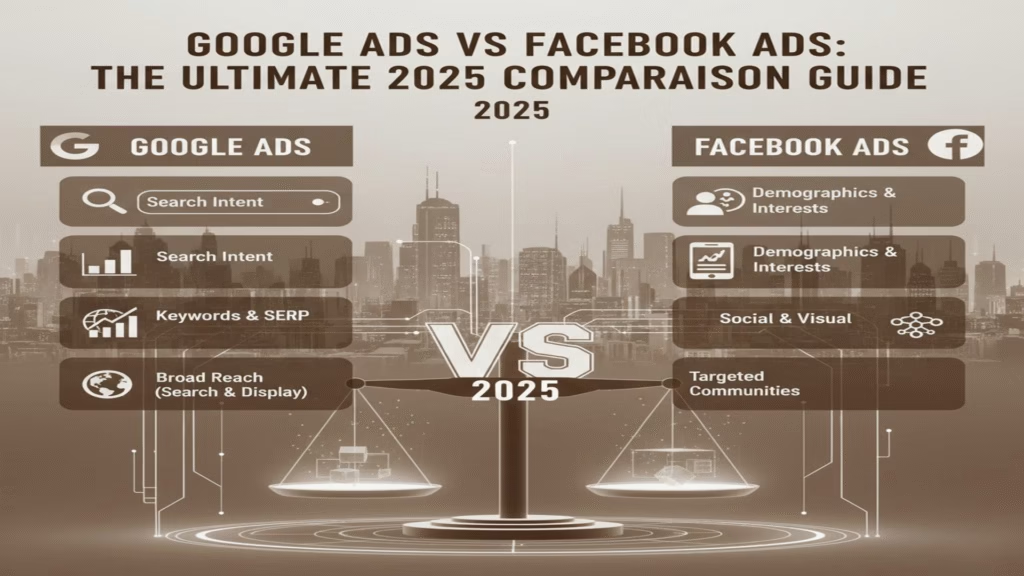
Every business faces the same dilemma when allocating advertising budgets. Should you invest in search-based advertising or social media platforms? This comprehensive analysis of google ads vs facebook ads reveals exactly which platform delivers superior results for specific business objectives.
The fundamental difference between these platforms shapes everything about campaign performance. One captures active searchers already seeking solutions. The other interrupts users during social browsing with targeted messaging.
Understanding the strategic implications of google ads vs facebook ads determines whether you capture high-intent buyers or build awareness among cold audiences. Your choice directly impacts customer acquisition costs, conversion rates, and overall marketing ROI.
The Core Philosophical Difference Between Google Ads vs Facebook Ads
Intent-Based Marketing Through Search
Google Ads operates on pull marketing principles where users actively search for solutions. Someone typing “best running shoes for marathons” demonstrates clear purchase intent and readiness to evaluate options.
This intent-driven approach explains why google ads vs facebook ads comparisons consistently show higher conversion rates for search campaigns. You reach people at the exact moment they need your solution.
Search queries reveal specific problems users want solved immediately. This behavioral signal provides tremendous targeting precision that demographic data alone cannot match.
The commercial value of search terms varies dramatically based on buyer intent signals. Queries containing “buy,” “best,” “review,” or “near me” indicate different readiness levels that smart advertisers exploit strategically.
Interruption-Based Marketing Through Social
Facebook Ads functions on push marketing principles by interrupting social activities with targeted messages. Users scrolling through friend updates aren’t actively searching for products when your ad appears.
This interruption model in the google ads vs facebook ads comparison requires exceptional creative execution and precise audience targeting. You must capture attention from distracted users engaged in social connection.
The platform compensates for lower intent through sophisticated behavioral and demographic targeting. You reach specific audience segments based on interests, behaviors, and life events rather than active searches.
Social advertising excels at creating demand rather than capturing existing demand. You introduce solutions to problems users didn’t know they had or remind them of needs they’ve deprioritized.
Targeting Capabilities: Google Ads vs Facebook Ads Deep Dive
Keyword-Based Targeting Power
Google Ads targeting revolves around search terms users enter voluntarily. This self-disclosed intent provides unmatched precision for reaching people actively researching specific topics.
Broad match captures variations and related searches, expanding reach while maintaining topical relevance. Phrase match balances reach and precision by requiring key terms in specific order.
Exact match delivers maximum precision by showing ads only for specific queries. The google ads vs facebook ads targeting comparison shows search keywords eliminate the guesswork inherent in demographic assumptions.
Negative keywords prevent wasted spend by excluding irrelevant searches. This refinement capability ensures budget focuses exclusively on qualified traffic meeting specific intent criteria.
Audience Segmentation Sophistication
Facebook Ads offers granular demographic targeting including age, gender, education, relationship status, and job titles. You narrow audiences to specific life circumstances relevant to your offerings.
Interest-based targeting reaches users based on pages they like, content they engage with, and topics they follow. The platform analyzes billions of behavioral signals to categorize user interests accurately.
Behavioral targeting identifies users based on purchase patterns, device usage, travel habits, and lifecycle events. This predictive capability in the google ads vs facebook ads equation helps you reach audiences before they actively search.
Custom audiences enable targeting website visitors, email subscribers, or customer lists. Lookalike audiences expand reach by finding users similar to your best customers algorithmically.
Cost Structure Analysis: Google Ads vs Facebook Ads Economics
Cost Per Click Dynamics
Google Ads operates on auction-based pricing where advertisers bid for placement. Competitive keywords in lucrative industries command premium prices reflecting their commercial value.
Quality Score rewards relevant ads with lower costs and better positions. High-quality experiences earn discounts that poor performers cannot access regardless of bid amounts.
The google ads vs facebook ads cost comparison shows search CPCs typically exceed social CPCs by 2-10x depending on industry. This premium reflects the higher intent and immediate conversion potential.
Seasonal fluctuations affect search costs dramatically as competition intensifies during peak demand periods. Retailers experience CPC spikes of 50-200% during holiday shopping seasons.
Social Advertising Investment Requirements
Facebook Ads generally delivers lower cost per click than search platforms. The interruption model and abundant inventory create more affordable entry points for advertisers.
However, lower click costs don’t guarantee better overall economics. Conversion rates often lag search campaigns, potentially increasing customer acquisition costs despite cheaper clicks.
The google ads vs facebook ads budget allocation requires analyzing cost per acquisition rather than cost per click. Cheaper clicks converting poorly deliver worse ROI than expensive clicks converting strongly.
Ad frequency management prevents overspending through repeated exposures to the same users. Social platforms charge for impressions even when users ignore your message completely.
Creative Requirements: Google Ads vs Facebook Ads Content Demands
Text-Centric Search Advertising
Google Ads prioritizes text-based messaging matching user search queries directly. Headlines must communicate relevance instantly to earn clicks from searchers evaluating multiple options.
Character limits force extreme concision where every word carries weight. You communicate value propositions, differentiators, and calls-to-action within tight constraints.
Extensions provide additional real estate for location information, additional links, phone numbers, and structured snippets. These enhancements in the google ads vs facebook ads creative equation improve click-through rates significantly.
Landing page relevance determines quality scores and campaign performance. The message match between ad copy and landing page content directly impacts conversion rates and campaign economics.
Visual Storytelling Requirements
Facebook Ads demands compelling visual assets that stop scrolling behavior instantly. Users ignore text-heavy ads that resemble spam rather than engaging content.
Video content typically outperforms static images by generating higher engagement and conversion rates. The platform’s algorithm rewards video consumption with broader organic and paid reach.
User-generated content and authentic storytelling resonate more effectively than polished corporate messaging. The google ads vs facebook ads creative comparison shows social users respond to genuine, relatable content rather than obvious advertisements.
Ad fatigue occurs rapidly on social platforms as users see the same creative repeatedly. Successful campaigns require continuous creative refresh to maintain performance levels.
Conversion Tracking: Google Ads vs Facebook Ads Attribution Challenges
Last-Click Attribution Advantages
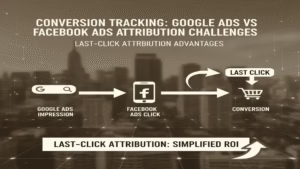
Google Ads benefits from last-click attribution where the final interaction before conversion receives full credit. Search clicks occurring immediately before purchase naturally receive attribution.
This attribution model favors bottom-funnel tactics capturing demand created elsewhere. The google ads vs facebook ads measurement comparison shows search campaigns often receive disproportionate credit for conversions.
Conversion tracking implementation proves more straightforward with search campaigns. Clear cause-effect relationships between clicks and conversions simplify performance analysis.
However, last-click attribution undervalues top-funnel awareness activities that introduce brands to consumers. Early-stage touchpoints creating initial interest receive no credit under this model.
Multi-Touch Attribution Complexity
Facebook Ads often initiates customer journeys rather than closing them. Users discover brands through social ads, then search specifically for those brands later before purchasing.
View-through conversions credit Facebook when users see ads but don’t click, then convert within attribution windows. This metric in the google ads vs facebook ads analysis captures social’s awareness-building value.
Attribution window selection dramatically affects reported performance. Seven-day windows favor immediate response platforms while thirty-day windows capture delayed conversions more completely.
Cross-device tracking challenges persist as users discover products on mobile but purchase on desktop. Platform-specific attribution models handle these journeys differently, complicating comparisons.
Campaign Objectives: Google Ads vs Facebook Ads Strategic Applications
Direct Response and Lead Generation
Google Ads excels for direct response objectives where immediate action represents the primary goal. High-intent searchers convert at superior rates when presented with relevant solutions.
Service businesses targeting local customers achieve excellent results through search campaigns. People searching “emergency plumber near me” want immediate solutions and convert rapidly.
The google ads vs facebook ads lead generation comparison consistently favors search for information-gathering stages. Users voluntarily requesting information demonstrate genuine interest.
E-commerce brands selling products people actively search for should prioritize search budgets. Capturing existing demand proves more efficient than creating awareness from scratch.
Brand Awareness and Consideration
Facebook Ads dominates brand awareness objectives where reaching specific demographics matters more than immediate conversion. Visual storytelling builds brand recognition effectively.
New product launches benefit from social advertising’s ability to introduce innovations to targeted audiences. You educate markets about solutions they didn’t know existed.
The google ads vs facebook ads brand building equation favors social platforms for emotional connection development. Stories, videos, and lifestyle content create affinity that text ads cannot match.
Retargeting campaigns on Facebook re-engage website visitors who didn’t convert initially. These reminder campaigns nurture prospects through extended consideration periods.
Audience Maturity: Google Ads vs Facebook Ads Buyer Journey Alignment
Bottom-Funnel Capture Strategy
Google Ads specializes in bottom-funnel capture where prospects actively evaluate purchase options. These high-intent users need final persuasion rather than problem education.
Branded search campaigns capture demand created through other marketing channels. People searching specifically for your company name demonstrate strong purchase intent.
The google ads vs facebook ads funnel position analysis shows search campaigns close deals initiated elsewhere. Your search presence ensures competitors don’t intercept your prospects.
Comparison keywords like “X vs Y” or “best X for Y” signal advanced research stages. These searches indicate imminent purchase decisions waiting for final validation.
Top-Funnel Awareness Development
Facebook Ads introduces brands to cold audiences unfamiliar with your existence. This awareness-building function creates future demand that search campaigns later capture.
Interest-based targeting reaches people whose characteristics match your ideal customer profile before they realize they need your solution. You create demand rather than capturing it.
The google ads vs facebook ads customer journey integration requires understanding how platforms work synergistically. Social creates awareness that search monetizes later.
Educational content performs exceptionally well on social platforms for complex products requiring explanation. You nurture prospects through learning phases before asking for commitments.
Performance Metrics: Google Ads vs Facebook Ads Success Indicators
Search Campaign Analytics
Click-through rate indicates ad relevance and appeal relative to search queries. Strong CTR signals message-market fit and reduces costs through quality score improvements.
Conversion rate measures how effectively landing pages convert searchers into customers. This metric in the google ads vs facebook ads analysis typically favors search campaigns significantly.
Cost per acquisition provides the ultimate performance measure by quantifying customer acquisition economics. Profitable CPA thresholds vary dramatically by industry and business model.
Search impression share reveals competitive position and growth opportunities. Low impression share indicates room for expansion through increased budgets or improved quality scores.
Social Advertising Measurements
Engagement rate measures how compellingly creative captures attention and inspires interaction. Comments, shares, and reactions indicate message resonance with target audiences.
Cost per thousand impressions affects total campaign economics when building awareness. Lower CPM enables broader reach for fixed budgets.
The google ads vs facebook ads engagement comparison shows social platforms generate more interactions but fewer immediate conversions. Engagement builds relationships that convert over time.
Frequency tracking prevents ad fatigue by monitoring how often users see identical creative. Excessive frequency increases costs while decreasing effectiveness.
Industry-Specific Recommendations: Google Ads vs Facebook Ads Suitability
E-Commerce and Retail Applications
E-commerce brands benefit from google ads vs facebook ads budget splits favoring search for existing products people actively seek. Shopping campaigns capture high-intent product searches effectively.
Fashion and lifestyle brands succeed on Facebook through visual storytelling and influencer partnerships. Impulse purchases driven by attractive imagery convert well socially.
Dynamic product ads retarget website visitors with specific products they viewed. These personalized reminders convert abandoners effectively across both platforms.
Seasonal promotions leverage google ads vs facebook ads simultaneously with search capturing active shoppers and social building awareness early.
B2B and Professional Services
Professional services targeting business clients should emphasize search campaigns capturing problem-aware prospects. Business buyers research extensively before engaging service providers.
LinkedIn outperforms Facebook for pure B2B targeting despite higher costs. The google ads vs facebook ads comparison should include LinkedIn for business audiences.
Content syndication through social advertising builds thought leadership that search campaigns monetize later. Educational content establishes expertise before prospects search.
Account-based marketing approaches use social platforms to target specific companies and decision-makers. Personalized campaigns reach stakeholders before they actively search.
Local Service Businesses
Local service businesses achieve outstanding results through google ads vs facebook ads strategies emphasizing search. Emergency and immediate-need services require search presence.
Facebook’s local awareness campaigns drive foot traffic to physical locations through geographic targeting. These campaigns build community presence effectively.
Google Maps integration gives search campaigns tremendous advantages for location-based businesses. Map pack placement often drives more calls than traditional search ads.
Review generation through social engagement improves search visibility indirectly. Strong social presence enhances overall digital footprint.
Advanced Strategies: Google Ads vs Facebook Ads Integration Tactics
Sequential Messaging Funnels
Integrated campaigns use Facebook to introduce brands to cold audiences, then retarget engagers with search campaigns. This google ads vs facebook ads sequencing maximizes efficiency.
Users engaging with social ads become custom audiences for subsequent retargeting. You build awareness broadly, then concentrate spending on interested prospects.
Search campaigns targeting branded keywords catch prospects who discovered you socially. This protective strategy prevents competitor interception of your social-generated demand.
Multi-platform attribution modeling reveals how channels work together throughout customer journeys. Sophisticated measurement prevents under-investing in awareness channels.
Dynamic Retargeting Across Platforms
Product-specific retargeting reminds website visitors about items they viewed. The google ads vs facebook ads retargeting comparison shows both platforms convert abandoners effectively.
Cart abandonment campaigns trigger automatically when users leave items unpurchased. These timely reminders often include incentives to complete transactions.
Browse abandonment targeting reaches users who viewed products but didn’t add to cart. Less aggressive messaging works better for these lower-intent visitors.
Cross-platform frequency capping prevents overwhelming prospects with identical messages everywhere. Coordinated campaigns provide breathing room while maintaining presence.
Budget Allocation: Google Ads vs Facebook Ads Investment Strategies
Testing Phase Resource Distribution
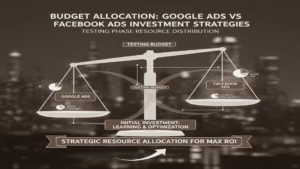
New advertisers should split budgets 60-40 favoring their stronger hypothesis. The google ads vs facebook ads testing approach requires sufficient budget for statistical significance.
Minimum viable budgets depend on conversion costs and traffic volume. Underfunded campaigns produce inconclusive results that waste money without generating learnings.
Testing periods should extend through complete business cycles capturing seasonality. Premature conclusions from short tests lead to poor long-term decisions.
Segment testing by campaign objective rather than platform. Awareness budgets flow where attention lives cheaply. Conversion budgets flow where intent concentrates.
Mature Campaign Optimization
Established campaigns should allocate based on contribution margin and growth potential. The google ads vs facebook ads mature strategy emphasizes profitable customer acquisition.
Incremental analysis determines which platform delivers the next best customer most profitably. Marginal returns guide expansion decisions better than average performance.
Platform-specific constraints like audience saturation affect scaling potential. Search budgets hit impression share ceilings while social audiences become exhausted.
Diversification across platforms reduces dependency risks when algorithm changes impact individual channels. Portfolio approaches smooth volatility.
Creative Testing: Google Ads vs Facebook Ads Optimization Approaches
Search Ad Copy Iteration
Headline testing impacts click-through rates more dramatically than description changes. The google ads vs facebook ads copy optimization shows search demands immediate relevance communication.
Benefit-focused messaging outperforms feature-focused copy consistently. Users care about outcomes achieved rather than technical specifications.
Number inclusion in headlines attracts attention and improves clarity. Specific claims like “Save 43%” outperform vague promises like “Save money.”
Responsive search ads test combinations automatically by rotating headlines and descriptions. Machine learning identifies winning formulas faster than manual testing.
Social Creative Experimentation
Visual testing should prioritize drastically different approaches rather than minor variations. The google ads vs facebook ads creative comparison shows social users respond to novelty.
User-generated content consistently outperforms professional photography by appearing more authentic. Real customers using products resonate more than models in studios.
Video hooks in the first three seconds determine whether users watch or scroll. Immediate value communication prevents instant abandonment.
Ad format testing explores carousels, collections, stories, and reels systematically. Different formats suit different products and audiences uniquely.
Mobile Optimization: Google Ads vs Facebook Ads Device Considerations
Mobile Search Behavior Patterns
Mobile searchers demonstrate higher immediate intent for local services and quick answers. The google ads vs facebook ads mobile comparison favors search for ready-to-act users.
Click-to-call extensions convert mobile searchers directly into phone conversations. Service businesses benefit enormously from this frictionless conversion path.
Mobile landing pages must load instantly or users abandon immediately. Page speed directly impacts quality scores and conversion rates.
Location extensions show distance to physical locations, driving foot traffic effectively. Proximity influences purchase decisions strongly for mobile users.
Social Mobile Dominance
Facebook usage occurs overwhelmingly on mobile devices where visual content shines. The google ads vs facebook ads device analysis shows social is inherently mobile-first.
Vertical video formats optimize for how users naturally hold phones. Stories and reels leverage native viewing behaviors effectively.
Instant experiences provide immersive mobile ad formats loading within Facebook itself. These fast-loading experiences prevent abandonment from slow external sites.
Mobile-specific offers and messaging acknowledge context differences. Mobile users want quick, simple interactions rather than complex research.
Seasonal Strategy: Google Ads vs Facebook Ads Timing Tactics
Search Volume Fluctuations
Search volume for commercial keywords spikes dramatically during buying seasons. The google ads vs facebook ads seasonal strategy requires search budget increases during peaks.
Competitor activity intensifies during high-volume periods, increasing costs substantially. Budget pacing throughout seasons prevents mid-period depletion.
Shoulder season optimization captures demand at lower costs before competition intensifies. Early positioning establishes presence before the rush begins.
Year-round presence maintains quality scores that provide advantages during competitive periods. Consistent activity earns better positioning than sporadic campaigns.
Social Awareness Building Cycles
Facebook campaigns should begin weeks before purchase seasons building awareness early. The google ads vs facebook ads timing integration uses social for demand creation.
Early-stage educational content nurtures prospects before they enter active shopping mode. You position your brand in consideration sets before search begins.
Retargeting campaigns intensify as purchase seasons approach, converting aware audiences. The combination of early awareness and late retargeting maximizes efficiency.
Post-season analysis identifies which awareness touchpoints influenced conversions. Attribution modeling improves future campaign timing decisions.
Compliance and Policy: Google Ads vs Facebook Ads Regulatory Landscape
Search Advertising Restrictions
Google prohibits advertising for certain products and services including illegal items, dangerous products, and dishonest behavior. The google ads vs facebook ads policy comparison shows both platforms restrict similar categories.
Healthcare and pharmaceutical advertising faces stringent requirements including certifications. Advertisers must prove legitimacy before running medical campaigns.
Financial services require transparency about rates, fees, and risks. Misleading financial advertising faces immediate suspension and potential legal consequences.
Political advertising demands verification and transparency labels. These requirements protect electoral integrity but add complexity for political campaigns.
Social Platform Limitations
Facebook restricts adult content, drugs, tobacco, weapons, and discriminatory practices. The google ads vs facebook ads approval process shows social platforms review creative more strictly.
Housing, employment, and credit advertisers face special restrictions preventing discriminatory targeting. These rules protect vulnerable populations from predatory practices.
Personal health and appearance advertising cannot create negative self-image. Body-shaming tactics violate policies even when technically accurate.
Shocking or sensational content faces restrictions even for legitimate businesses. The balance between attention-grabbing and policy-compliant requires careful navigation.
Future Trends: Google Ads vs Facebook Ads Evolution Predictions
Automation and Machine Learning Advancement
Smart bidding strategies increasingly outperform manual bid management. The google ads vs facebook ads automation comparison shows both platforms leveraging AI extensively.
Performance Max campaigns on Google consolidate inventory access under automated management. This shift reduces granular control while improving results algorithmically.
Advantage+ campaigns on Facebook automate targeting and creative decisions. Machine learning identifies optimal audiences and messages faster than humans.
Advertisers focusing on strategic direction while automating tactical execution achieve superior results. The human role evolves toward objectives and creative strategy.
Privacy-First Advertising Approaches
Cookie deprecation forces both platforms toward first-party data reliance. The google ads vs facebook ads privacy adaptation requires building owned audience data.
Conversion modeling fills gaps created by tracking limitations. Statistical inference estimates conversions that cannot be measured directly.
Privacy Sandbox initiatives aim to balance personalization with user privacy. These compromises shape the future of targeted advertising fundamentally.
First-party data collection through owned media becomes increasingly valuable. Email lists and customer databases provide targeting capabilities independent of platform access.
Conclusion: Making Your Google Ads vs Facebook Ads Decision
The google ads vs facebook ads choice isn’t binary but strategic. Successful businesses leverage both platforms for different objectives aligned with each platform’s strengths.
Search campaigns excel at capturing existing demand from high-intent prospects actively seeking solutions. Social campaigns build awareness and create demand among target audiences.
Your budget allocation should reflect business objectives, competitive positioning, and customer journey characteristics. Bottom-funnel conversion priorities favor search while brand building favors social.
Test both platforms systematically while tracking full-funnel attribution. The google ads vs facebook ads optimal mix varies by industry, offer, and target audience uniquely.
Start where your customers search for solutions or spend attention. Double down on what works while maintaining presence across both for diversification.
The businesses dominating digital advertising master google ads vs facebook ads synergies. Integrated strategies leveraging each platform’s unique advantages deliver superior results than platform-exclusive approaches.
About the Author
Anas Mallik is a digital marketing strategist specializing in AI marketing automation, B2B content marketing, and SEO optimization. With a data-driven approach, Anas helps businesses scale through innovative strategies and conversion-focused campaigns. Through comprehensive guides and actionable insights, Anas empowers marketers to achieve measurable results in competitive digital landscapes.